When ChatGPT Has Outdated Facts About You
The same error can come from the model's memory, from a page that is still online, or from a gap the AI filled in. Each origin is fixed somewhere different.
A price you changed a year ago. An office that is no longer yours. A role somebody left in 2024. AI states it with exactly the same confidence it uses for the things that are true, and the person asking has no way to tell the difference. The first thing to understand is that the error can come from three different places, and only one of them is fixed on your own site.
Why the same error is not always fixed the same way
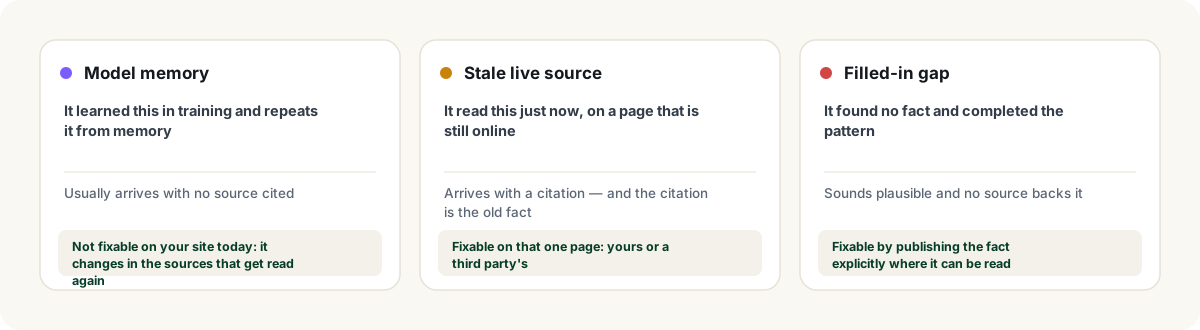
Model memory. The fact went in when the model was trained and comes back out from memory. It usually arrives with no source cited, because nothing was read: it is being recalled. This is the origin you have least direct control over.
Stale live source. The assistant read the fact just now, on a page that is still published. It arrives with a citation, and that citation is precisely the page to fix. This is the most common case and by far the most actionable.
Filled-in gap. It found no fact and completed the pattern. A reasonable founding date, a believable headcount, an integration anyone in your category would have. You recognise it because it sounds right and nothing published supports it.
Why there is no edit button
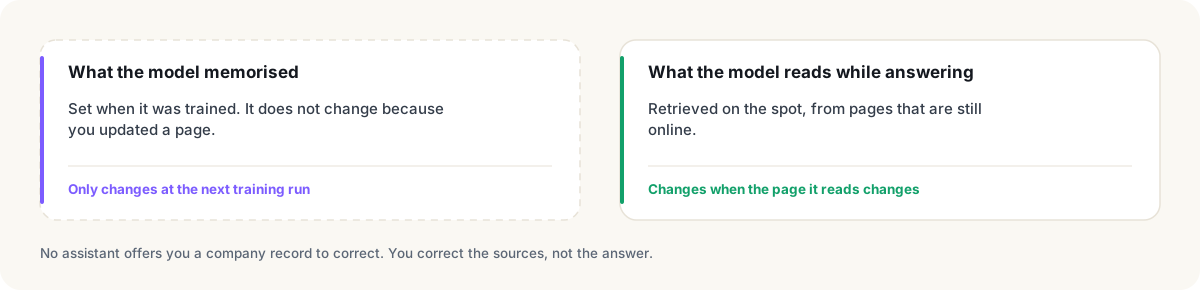
This is the part that throws almost everyone: you update your pricing page, ask again, and the assistant says the same thing. It is not ignoring you. That particular fact came from its memory, not from your site — and memory does not refresh because you published.
What does change when you change the source is what the model retrieves while answering. Which means the sensible order is the opposite of the usual one: first find which answers cite a specific page and fix that page, and only then worry about what the model remembers.
Where the stale fact lives
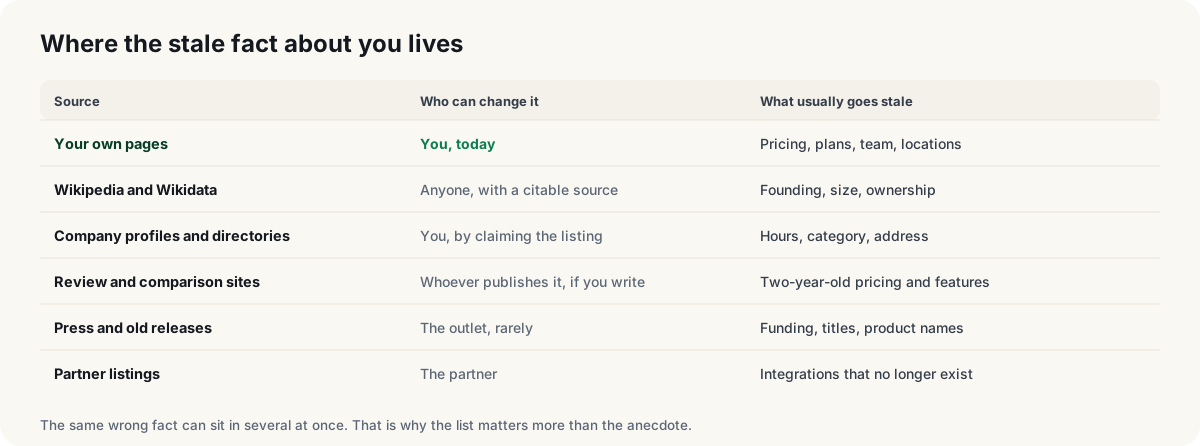
The middle column is what decides your work plan. What sits on your pages you fix today. What sits in a profile or directory you fix by claiming the listing. What sits in a third party’s comparison only moves if somebody writes to them — with the correct fact, the exact URL and something that backs it.
And order by what costs you money, not by what annoys you: an old price in a comparison the AI cites in every answer does more damage than a wrong founding date in a directory nobody reads.
Why this gets past you
Nobody tells you. The buyer who got the old price does not write in to correct you: they form an impression and move on. It does not show up in your analytics, because the whole conversation happened off your site. And since every engine answers differently and changes between questions, a manual check on a Tuesday says nothing about Thursday.
If what you want first is to know what AI is saying about you at all, that is a different question with its own guide: what ChatGPT says about your company, and how to know. This one is about why the fact is stale and where it gets fixed.
How CitePatch handles it
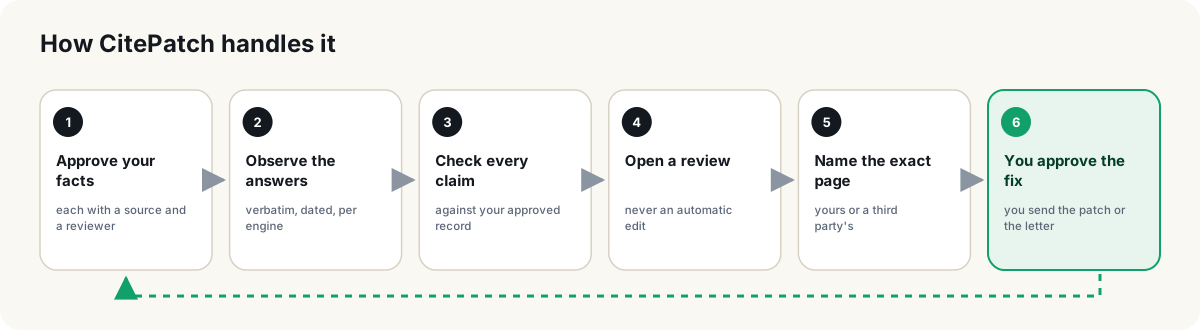
Everything starts from your record of approved facts: each one with its source and the person who reviewed it, with its provenance and its date in plain sight. A later correction is a new version or a withdrawal, never a silent edit.
From there the Monitor keeps the answers word for word, dated and per engine, and every observed claim is checked against that record. Anything contradicting it opens a review, not an automatic change, with the exact page it came from — never a vague “somewhere out there”. If the page is yours, a bounded patch is proposed. If it belongs to a third party, a contact is suggested when a reasonable one can be found and Vera drafts the letter from your approved fact and the specific claim it corrects. CitePatch does not send it: you do.
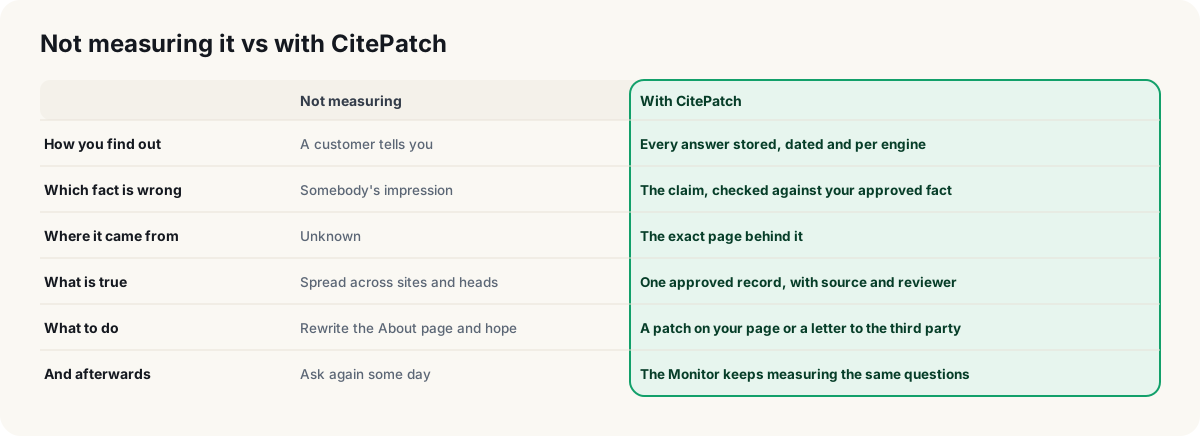
What you can say after the first measurement
- “These answers give a price that is not ours, and these are the pages they cite.” — a list of URLs, not a complaint.
- “Nothing we publish supports this fact.” — a content gap with a name and a place to fix it.
- “Of these sources, three we can edit today and two need a letter.” — a plan, not a lament.
- “Since we corrected that page, the answers citing it no longer repeat the old fact.” — same record, dated.
None of them promises a timeline or a click. All of them are actionable this week.
Next step
Take the five facts you would least like to see wrong — price, location, size, integrations, who runs it — and check what AI answers about each. If one is stale, you already know the next step is not rewriting your About page: it is finding the page it came from. Create your account and let the system find it.
Frequently asked questions
- Why does ChatGPT have outdated information about my company?
- Because an answer is built from two different things: what the model memorised during training, fixed at that date, and what it retrieves on the spot from pages that are still online. If your price changed after the training run, or if the page it reads still shows the old price, the fact that comes out is old even though your site is current.
- Can I edit what ChatGPT says about my company?
- Not directly. There is no company record to correct and no form that edits an answer. What you can correct are the sources: your own pages, the profiles and directories you can claim, and third-party pages whose owner you can write to.
- Why does ChatGPT make up facts about my company?
- When it cannot find the fact, the model tends to complete the pattern rather than say it does not know: a plausible founding date, a believable team size, an integration that fits your category. You recognise it because it sounds reasonable and no source backs it.
- How do I tell an outdated fact from an invented one?
- By the source. If the answer cites a page and that page shows the old fact, it is a stale live source and it is fixed there. If it cites nothing and the fact is published nowhere, it is a filled-in gap, and it is fixed by publishing the fact explicitly.
- How long does a correction take?
- It depends on the origin, and nobody can promise a window. What is read on the spot changes when that page changes; what the model memorised only moves in later training runs. That is why it pays to fix what is retrieved live first — the only part you control directly.
- What does CitePatch do with a wrong fact about my company?
- It keeps an approved record of your facts, each with a source and a reviewer, and checks every observed claim against it. Anything that contradicts your record opens a review, never an automatic edit, with the exact page it came from; from there a patch to your page or a letter to the third party is drafted, and you send it.